 Image 1 of 4
 Image 2 of 4
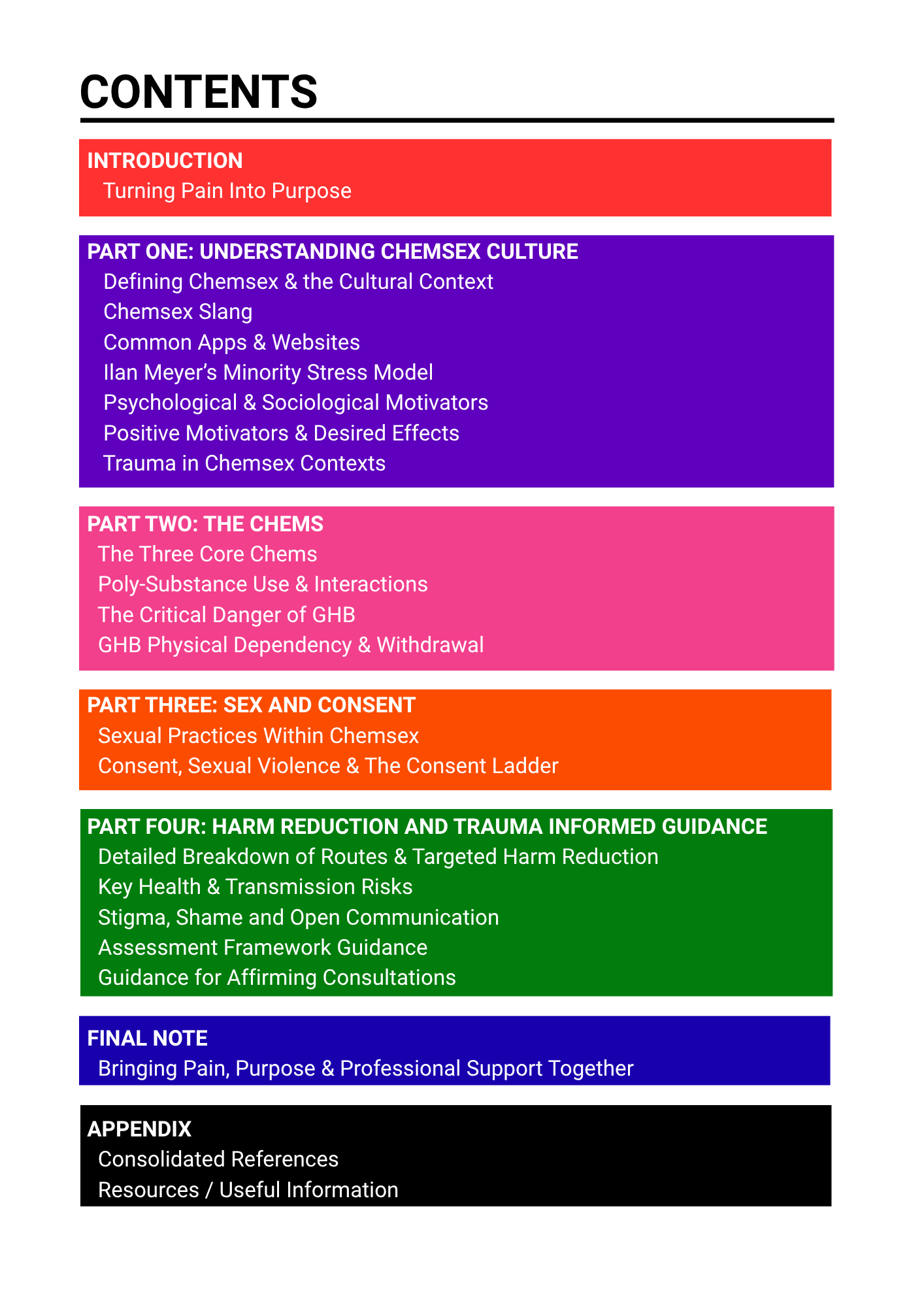 Image 3 of 4
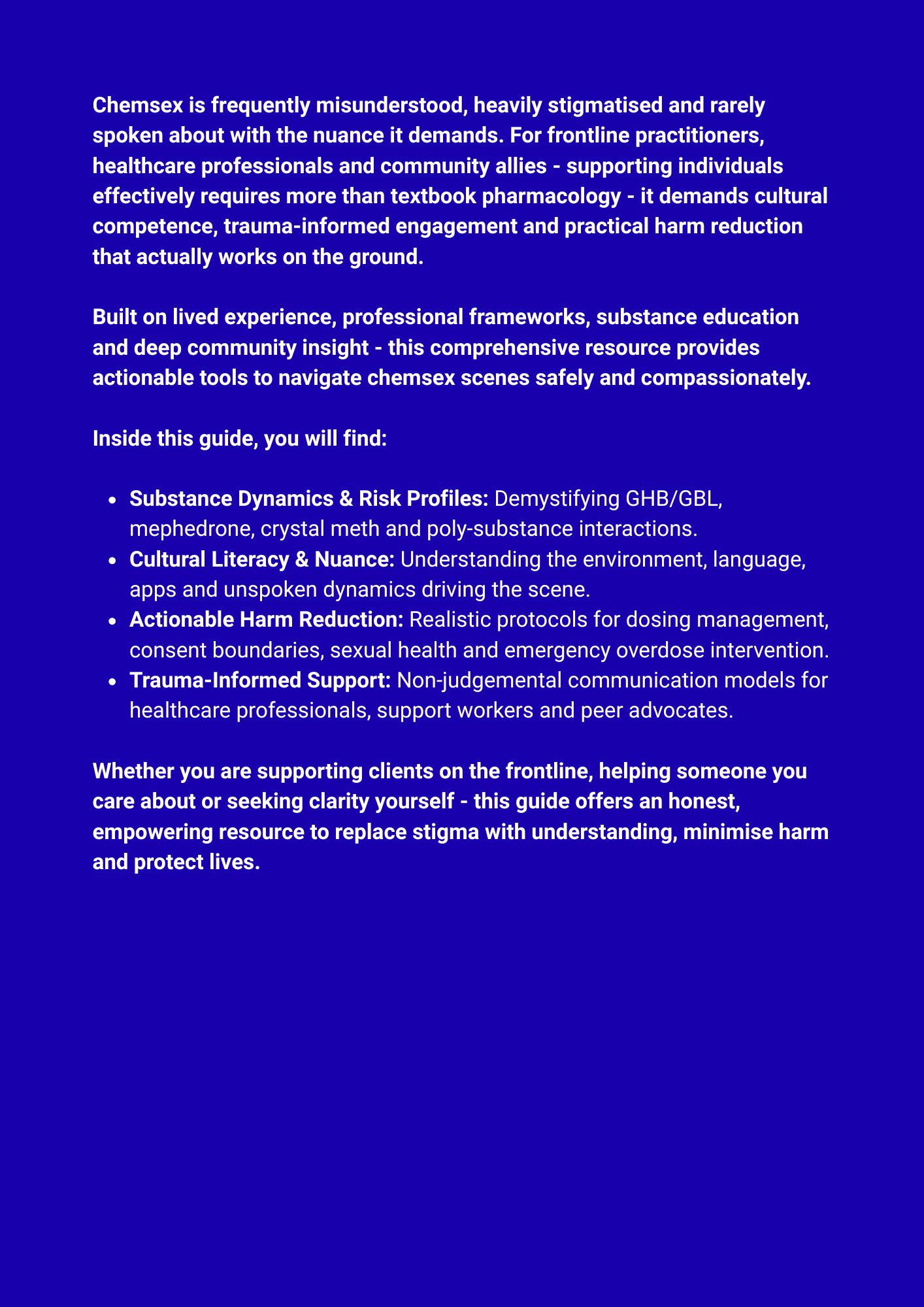 Image 4 of 4
If we want frontline support to actually work, we have to move past sterile pharmacology and start talking about real life. That means understanding the scene, getting trauma-informed and offering harm-reduction advice people can actually use.
That’s exactly why I put this guide together. Across 92 comprehensive pages, it connects the dots between clinical knowledge and lived experience, translating the reality of the chemsex subculture into practical, life-saving frameworks for healthcare staff and community teams. Whether you're trying to make sense of coded scene language or navigate acute crisis situations, it gives you everything you need to drop the awkward detachment and support people with dignity, warmth and real-world clarity.
If we want frontline support to actually work, we have to move past sterile pharmacology and start talking about real life. That means understanding the scene, getting trauma-informed and offering harm-reduction advice people can actually use.
That’s exactly why I put this guide together. Across 92 comprehensive pages, it connects the dots between clinical knowledge and lived experience, translating the reality of the chemsex subculture into practical, life-saving frameworks for healthcare staff and community teams. Whether you're trying to make sense of coded scene language or navigate acute crisis situations, it gives you everything you need to drop the awkward detachment and support people with dignity, warmth and real-world clarity.